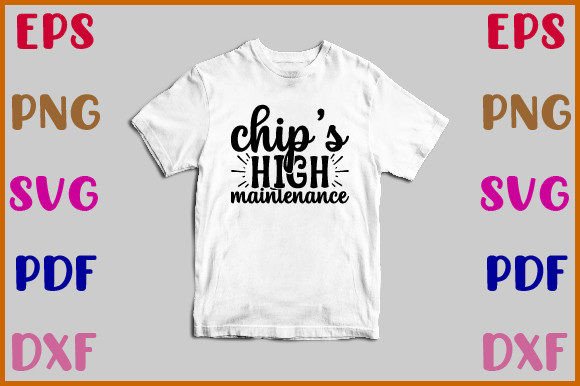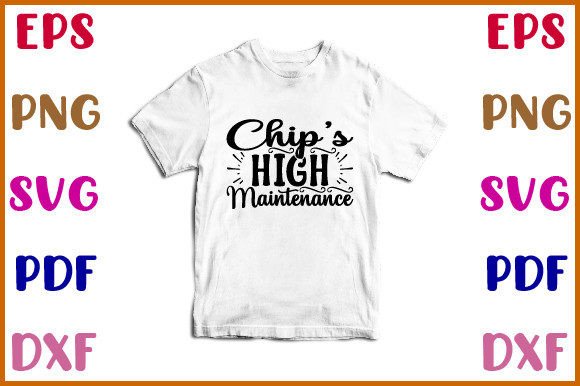
Chip’s High Maintenance
A First Impression That Speaks Volumes
At first glance, Chip’s High Maintenance feels like a design that demands attention. It’s not the kind of embroidery that fades into the background; it’s bold, with a personality that’s both playful and slightly irreverent. The image of a dog—likely a Chihuahua or similar breed—conveys a sense of tiny stature paired with big attitude. This contrast is immediately engaging, making it a strong candidate for projects where character and visual impact are key.
Design Layout and Detail Level
The layout of Chip’s High Maintenance is clean but thoughtful. The dog is centered, with enough negative space around it to avoid feeling cluttered. The details are well-defined, especially the facial features and fur texture, which are rendered with a level of precision that suggests a professional design process. However, there are subtle elements that might require careful consideration before use.
For instance, the eyes and nose are filled with satin stitch, creating a soft, rounded look that adds depth. The ears and tail are outlined with running stitch, giving them a light, almost delicate appearance. These choices make the design feel approachable yet distinctive. But when it comes to stitching, the density in the face area can be quite tight, which may affect how it looks on different fabric types.
Real-Life Use Cases: Where Does This Design Fit?
Chip’s High Maintenance is versatile enough to work across multiple applications. For custom apparel, it would look great on a t-shirt, sweatshirt, or even a tote bag. The dog’s expressive face could add a fun element to a casual wardrobe piece. On a cap or hat, the design maintains its clarity, though the small hoop size required might be a limiting factor depending on the machine used.
It also has potential for personalized gifts, such as baby clothes or holiday items. A baby embroidery project using this design could be endearing, especially if the child has a fondness for dogs. Similarly, a holiday embroidery project featuring Chip’s High Maintenance could serve as a unique and memorable gift for pet lovers.
However, it’s important to consider the limitations. The detailed facial features may not translate well on textured fabrics or dark backgrounds. A black t-shirt might swallow the design’s colors unless the thread contrast is carefully chosen. Likewise, the stitch density in the face area could lead to uneven results on thin or stretchy fabrics.
Design Considerations for Commercial and Personal Projects
If you’re an Etsy seller or running a craft business, Chip’s High Maintenance offers a good balance between uniqueness and usability. It’s not overly complex, which means it can be easily adapted for both personal and commercial use. However, it’s crucial to test the design on scrap fabric before committing to a final product.
One practical tip is to review the thread color contrast and stitch density beforehand. Using a printable mockup can help visualize how the design will appear on different fabrics and under various lighting conditions. Additionally, checking the hoop size requirements ensures compatibility with your machine, avoiding the frustration of last-minute adjustments.
When to Be Cautious: Limitations and Challenges
While Chip’s High Maintenance is a solid choice for many projects, there are scenarios where it might not perform as well. For example, on layered garments or curved surfaces like caps, the design might not sit perfectly due to the way stitches interact with fabric contours. Also, the tiny lettering in the design—if present—could be difficult to see on small hoop sizes or thin fabric.
Another consideration is the stabilizer used during embroidery. A poor choice can lead to puckering or distortion, especially on stretchy or delicate fabrics. Ensuring proper stabilizer application is essential for achieving a clean, professional finish.
Visual Appeal and Customer Perception
From a visual appeal standpoint, Chip’s High Maintenance is a winner. Its playful tone and attention to detail make it appealing to a wide range of customers. When stitched correctly, it can elevate a simple item into something special, adding value to the finished product.
However, the customer trust aspect shouldn’t be overlooked. If the design doesn’t stitch as expected, it can damage the reputation of your brand. As an embroidery designer or small shop owner, ensuring that the design performs well in real-life situations is crucial for maintaining buyer engagement and brand consistency.
Practical Designer Notes for Success
Before using Chip’s High Maintenance in any project, take the time to do a few things:
- Test on scrap fabric to assess stitch quality and overall appearance.
- Check thread color contrast against the intended fabric background.
- Review stitch density and ensure it matches your machine’s capabilities.
- Confirm hoop size and ensure it fits your equipment.
- Inspect small details like eyes, ears, and tail for clarity.
- Test in black and white to evaluate how the design holds up in different lighting conditions.
- Use proper stabilizer to prevent puckering and distortion.
- Check licensing if you plan to sell finished products or digital files.
By following these steps, you’ll be better equipped to deliver a high-quality, visually appealing embroidery project that meets both your standards and your customers’ expectations.